


Temporary dewatering is a critical part of municipal construction, emergency drainage, sewer maintenance, and wastewater infrastructure projects. Mobile self-priming pumps provide a practical solution where fast deployment and reliable operation are required.
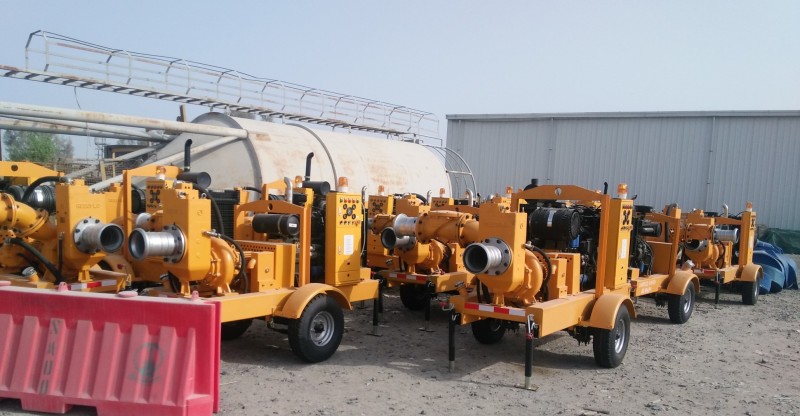
Based on TKFLO’s project experience in municipal dewatering applications, this guide outlines key selection factors and practical recommendations to help civil engineers and contractors choose the right mobile dewatering pump for temporary pumping projects.
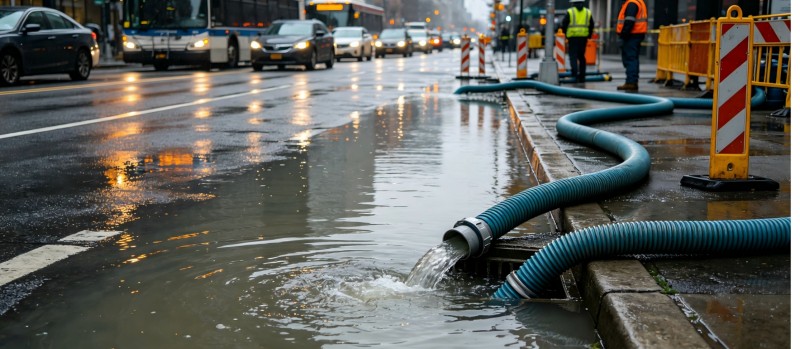
Why Municipal Dewatering Projects Are Challenging
Municipal dewatering projects often involve demanding site conditions that require reliable and flexible pumping solutions.
- • Limited Working Space – Underground utilities and confined construction areas often restrict equipment installation and operation.
- • Variable Water Conditions – Stormwater, groundwater, and wastewater may contain sand, sludge, and debris that increase the risk of clogging and wear.
- • Emergency Response Requirements – Flooding and pipeline failures require pumps that can be deployed quickly and operate continuously.
- • Environmental Compliance – Noise, emissions, and leakage control are important considerations for urban construction projects.
- • Efficient Site Management – Temporary pumping systems should be easy to transport, install, operate, and maintain to reduce project downtime and operating costs.

Common On-Site Pumping Challenges
Municipal dewatering projects often present a range of operational challenges that should be considered when selecting pumping equipment.
- • Restricted Site Access – Confined construction areas and underground utilities may limit equipment size and installation space.
- • Loss of Prime – Fluctuating water levels or air entering the suction line can interrupt pump operation if the system is not designed for reliable self-priming.
- • Debris Handling – Wastewater containing sand, sludge, plastics, or other solids increases the risk of blockage and component wear.
- • Continuous Operation – Long operating hours require efficient hydraulic performance and reliable engine or motor operation.
- • Maintenance Requirements – Equipment that is easy to inspect and service helps reduce downtime during temporary pumping projects.
- • Application Compatibility – Different projects may require pumps with specific materials, configurations, or installation arrangements to suit local operating conditions.
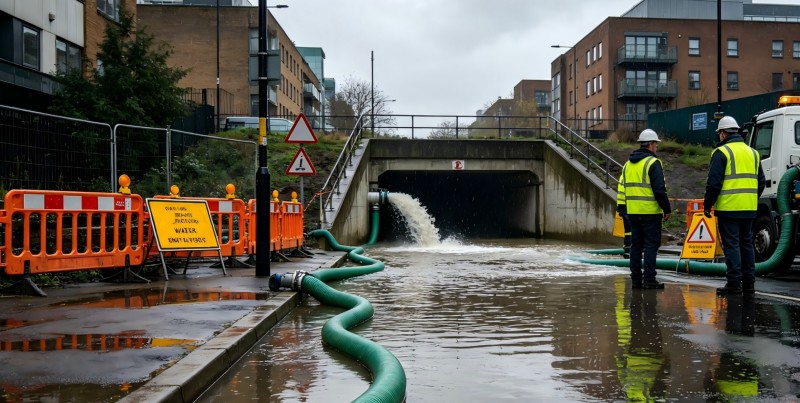
Key Considerations for Selecting Municipal Dewatering Pumps
When selecting a mobile dewatering pump for municipal applications, engineers should consider more than flow rate and head. The following factors are commonly evaluated to ensure reliable performance on site.
- • Reliable Self-Priming – Fast self-priming performance with the ability to handle fluctuating water levels and occasional air in the suction line.
- • Solids Handling Capability – Hydraulic design suitable for water containing sediment, sludge, and other suspended solids to reduce the risk of blockage.
- • Continuous Operation – Components and sealing systems designed for extended operating periods under demanding site conditions.
- • Protection and Control – Protective functions such as dry-run, overload, and automatic start/stop help improve operational safety and reduce manual intervention.
- • Flexible Installation – Configurations suitable for different site requirements, including skid-mounted, trailer-mounted, or enclosed packages.
- • Ease of Maintenance – A service-friendly design that simplifies routine inspection and replacement of wear parts, helping minimize downtime.
Mainstream Mobile Dewatering Technology Comparison
Four dominant pumping technologies serve global municipal dewatering. This objective comparison helps engineers select solutions matching project budgets and site conditions:
| Technology | Core Advantages | Limitations | Typical Applications |
|---|---|---|---|
| Vacuum Assisted Priming | High priming stability, reliable for long-distance water delivery, low failure rate | Requires auxiliary vacuum system, higher cost and routine component maintenance | Long-term sewer bypass, municipal routine maintenance |
| Mechanical Self-Priming | Integrated structure, fast startup, flexible mobility, cost-effective | Limited anti-clogging performance, unstable priming under heavy air intake | Short-term construction dewatering, general sewage transfer |
| Electric Submersible | No suction limit, low noise, simple installation for deep water accumulation | Poor dry-run resistance, easy motor burnout, difficult underwater maintenance | Deep foundation pit dewatering, fixed tank drainage |
| Dry Self-Priming | Short dry-run tolerance, strong variable condition adaptability, wide usability | High technical threshold for stable design; low-end models have low efficiency | Flood emergency rescue, unattended variable-water-level projects |
Application-Specific Pump Matching Guide
TKFLO summarizes targeted model solutions for core municipal scenarios to simplify engineer selection:
| Application Scenario | Recommended Model | Core Benefits |
|---|---|---|
| Urban Flood Control & Emergency Drainage | SPDW Series | Large flow, strong anti-clogging performance, flexible trailer mobility for fast flood rescue |
| Sewer Bypass & Pipeline Rehabilitation | SPH Series | Precision automatic control, stable long-term priming for unattended pipeline maintenance |
| Construction & Foundation Pit Dewatering | SPDW Series | 9.5m high suction lift, compact structure, low maintenance for narrow construction sites |
| Wastewater Plant Maintenance | SPH Series | Low noise & vibration, optional corrosion-resistant materials for standardized environmental operation |
Why Choose TKFLO for Municipal Dewatering Applications
TKFLO focuses on providing reliable pumping solutions through engineering support, manufacturing capability, and project experience. Our value is based on adapting pump systems to specific site requirements and supporting customers throughout the project process.
- • Application-Based Engineering Support – Pump solutions customized according to water conditions, installation space, operating environment, and project requirements.
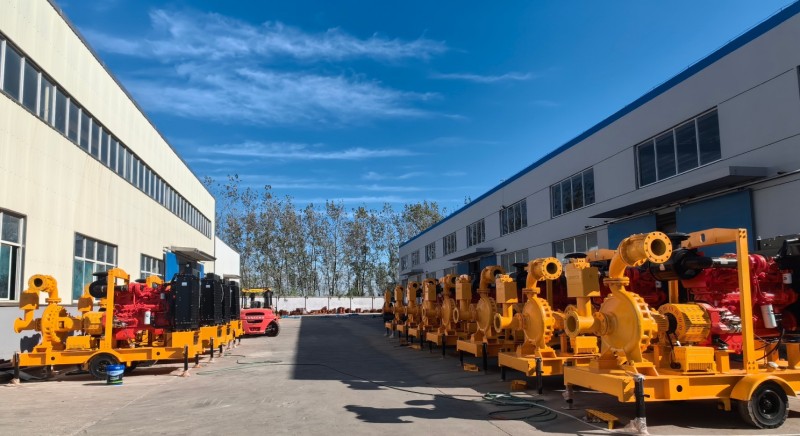
- • Flexible Manufacturing Capability – Modular production and responsive scheduling to support both standard and customized pumping needs.
- • OEM/ODM Solutions – Flexible manufacturing options for contractors, distributors, and project-specific procurement requirements.
- • Complete Testing and Documentation – Performance testing, inspection support, and technical documents to ensure project compliance.
- • Global Technical Support – Engineering communication and after-sales support for international projects.
- • Spare Parts Availability – Reliable spare parts supply to support long-term equipment operation.
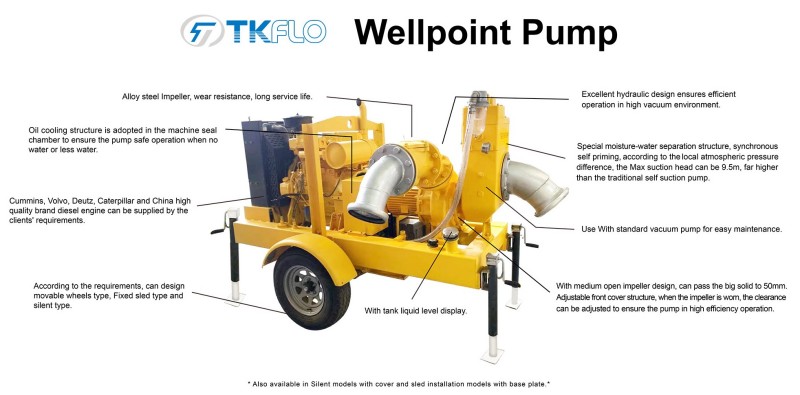
Selected Municipal Dewatering Applications
TKFLO pumping systems have been applied in various municipal and infrastructure projects, including:
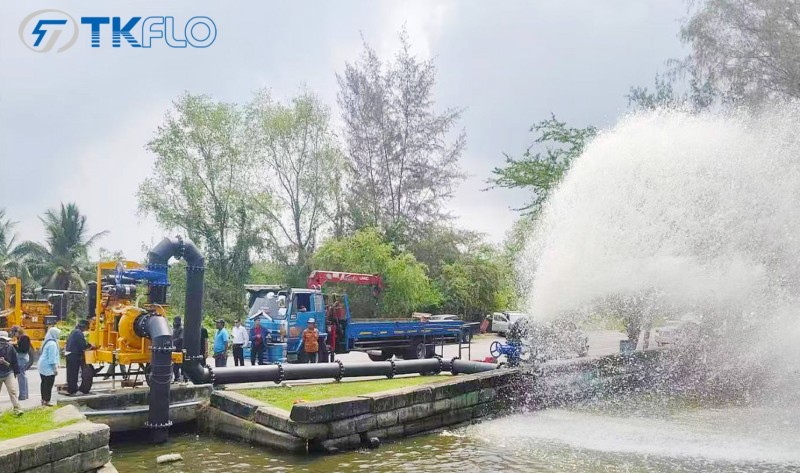
- • Urban Flood Control – Mobile dewatering pump sets used for emergency drainage and floodwater management in urban areas.
- • Irrigation Water Transfer – Self-priming pump systems applied for agricultural water transfer under variable operating conditions.
- • Sewer Rehabilitation – Compact pumping solutions used for temporary bypass pumping during pipeline maintenance.
- • Emergency Drainage Projects – Fast-deployment pump sets supporting water removal after heavy rainfall and extreme weather events.
- • Pump Station Maintenance – Customized pumping solutions designed for challenging environments and temporary operation requirements.
FAQs
The following questions address common technical considerations for municipal dewatering pump selection, installation, and operation.
1. What is the maximum suction lift of TKFLO self-priming pumps?
TKFLO self-priming dewatering pumps can achieve a vertical suction lift of up to approximately 9–9.5 meters under suitable operating conditions. The actual performance depends on water temperature, suction pipe arrangement, atmospheric conditions, and site installation.
2. What size of solids can TKFLO dewatering pumps handle?
TKFLO dewatering pumps are designed with open or semi-open impeller configurations and large flow passages to handle water containing sediment, sludge, and suspended solids. Some models can accommodate solids passage up to 75 mm, depending on pump configuration and application requirements.
3. Should I choose a diesel-driven or electric-driven dewatering pump?
The selection depends on site conditions:
- • Diesel-driven pumps are suitable for remote locations, emergency drainage, or projects where power supply is limited.
- • Electric-driven pumps are preferred for long-term operation in areas where stable power is available and lower noise or emissions are required.
4. What is the difference between trailer-mounted and skid-mounted pumps?
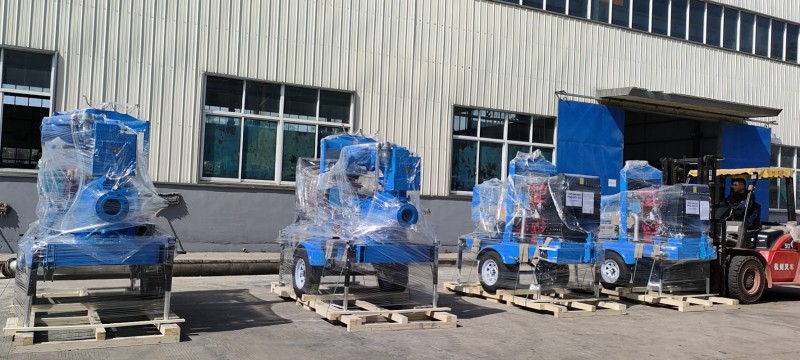
- • Trailer-mounted units provide better mobility and are suitable for emergency response and multi-site operations.
- • Skid-mounted units are suitable for fixed installation, temporary bypass pumping, or projects where space and installation flexibility are important.
5. Can TKFLO pumps operate under dry-running conditions?
Certain TKFLO self-priming pump models are designed to tolerate short periods of dry running. The operating limits depend on pump structure, sealing system, and application conditions. Additional protection systems can be integrated according to project requirements.
6. Can TKFLO provide customized dewatering solutions?
Yes. TKFLO can customize pump systems according to project requirements, including:
- •Flow rate and head requirements
- •Diesel engine or electric motor selection
- •Trailer, skid, or containerized packages
- •Material selection for corrosive or special fluids
- •Control systems and monitoring options
7. What testing and documentation are available before delivery?
TKFLO provides performance testing according to project requirements, including pump flow, head, power consumption, and operational verification. Third-party witness testing and inspection services can also be arranged when required. Test reports and technical documents are available for project submission and approval.
8. How does TKFLO support international projects after delivery?
TKFLO provides technical communication, installation guidance, operation support, and spare parts assistance to help customers maintain reliable pump performance throughout the project lifecycle.
Work With TKFLO – Professional Municipal Engineering Support
Whether for sewer bypass renovation, flood emergency systems, construction dewatering, or wastewater plant maintenance, TKFLO’s engineering team provides customized solutions based on your actual site conditions, project cycle, and budget.
All solutions comply with international municipal engineering standards, with complete technical documents and test reports to support project bidding and acceptance.
Free Technical Resources & Service Access
- •Request Full Product Catalogue
- •Request Custom Project Quotation
- •Download Datasheets, Performance Curves & GA Drawings
- •Download Official Operation Manuals
- •Consult Professional Municipal Pump Engineers
Post time: Aug-03-2026