


UL/FM certifications are the global benchmarks guaranteeing a fire pump’s reliability, performance, and safety. For importers, specifying these standards for a fire pump china is the most effective way to ensure products meet stringent international fire safety codes. With fire-related incidents causing over 180,000 deaths worldwide annually, this verification is critical.
A certified fire pump china provides the crucial assurance that it will function as designed during an emergency, protecting lives and property.
Why UL/FM Certification is Non-Negotiable
Choosing a fire pump is a decision with significant consequences. UL/FM certification is not merely a feature; it is a fundamental requirement that impacts market access, product reliability, and financial liability. For importers, understanding the value of these certifications is the first step toward a secure and successful business strategy. They represent a universal language of safety and quality recognized by authorities, insurers, and end-users worldwide.
Securing Market Access and Code Compliance
Importers quickly discover that UL/FM certification acts as a passport for their products. Many countries and regions make these standards a mandatory prerequisite for market entry. Attempting to import non-certified pumps into these markets often results in rejected shipments, wasted investment, and legal complications.
For example, specific national and regional building codes directly reference or mandate compliance with these international standards.
- Saudi Arabia requires SASO approval for construction products, and its building code (SBC) explicitly recognizes UL and FM standards for certifying fire safety systems.
- North and South America, along with many other nations, incorporate standards from UL, FM, NFPA, and others directly into their building regulations.
Furthermore, influential codes like the National Fire Protection Association (NFPA) standards require critical fire protection components to be ‘listed.’ This listing process almost always necessitates certification from an organization like UL Solutions or FM Global. A fire pump without this listing cannot be legally installed in a system designed to NFPA standards, effectively closing off a massive segment of the global market. Canada follows a similar model, referencing CAN/ULC standards, the Canadian equivalent of UL, for fire system components.
Guaranteeing Performance Under Pressure
A fire pump has one job: to work flawlessly during a fire. UL/FM certification provides the ultimate guarantee that the pump will perform under the most extreme conditions. This assurance comes from a rigorous, multi-stage testing protocol that goes far beyond a manufacturer’s internal quality check.
The certification process subjects each pump model to a battery of demanding evaluations:
1.Initial Testing: The pump’s design is first evaluated for its ability to handle high flow rates and pressures. Its durability is also tested under continuous, demanding operation.
2.Pressure and Flow Rate Testing: The pump must prove it can deliver the exact flow rates and pressures specified in its design, ensuring it can supply adequate water to the entire fire protection system.
3.Material and Construction Evaluation: Every critical component, from the motor and impeller to the pump casing, undergoes analysis. Testers check the materials for strength, corrosion resistance, and the ability to withstand harsh environments.3.Operational and Safety Testing: The pump must run for extended periods without failure. Safety features, like pressure relief valves, are tested to ensure they function correctly under stress.
Note: This exhaustive testing process confirms that the pump’s performance on paper matches its real-world capabilities. A UL/FM certified pump is a proven asset, engineered and verified to protect lives and property when it matters most.
Reducing Liability and Insurance Premiums
Importing and supplying fire safety equipment carries inherent liability. In the event of a fire, equipment failure can lead to catastrophic property loss, injury, or death, exposing suppliers and installers to significant legal and financial risk.
Specifying UL/FM certified fire pumps is a powerful act of due diligence. This certification serves as documented, third-party proof that the product meets the highest international safety and performance standards. It demonstrates a commitment to quality that can be crucial in mitigating liability.
This commitment also has direct financial benefits. Insurance companies assess risk to determine premiums for commercial properties.
·Facilities protected by UL/FM certified equipment are considered lower risk.
·Insurers recognize that this equipment is less likely to fail.
·This often translates into more favorable insurance terms and lower annual premiums for the building owner.
For an importer, supplying certified products strengthens their brand’s reputation and provides their clients with a clear path to reduced operational costs and enhanced safety.
Building Your Brand’s Reputation for Quality
An importer’s brand reputation in the fire safety market hinges on trust and reliability. Supplying UL/FM certified fire pumps provides a powerful tool for building a reputation founded on excellence. This certification is more than a technical specification; it is a marketing asset that communicates a commitment to uncompromising safety and quality.
In a competitive global market, UL/FM certification immediately differentiates a supplier’s brand. It elevates the product line above low-cost, non-certified alternatives that carry significant performance risks. This clear distinction allows importers to position their brand in a premium segment, attracting clients who prioritize safety and long-term value over initial cost.
A brand built on certified quality becomes synonymous with reliability. This reputation is a long-term asset that attracts discerning clients and fosters lasting business relationships.
This commitment to quality resonates with every stakeholder in the supply chain:
·Engineers and Consultants specify products they can trust. A UL/FM mark simplifies their design and approval process, giving them confidence that the pump meets stringent code requirements. They will favor brands that consistently provide certified solutions.
·Contractors and Installers depend on products that work correctly and pass inspections the first time. Supplying certified pumps reduces their risk of project delays, failed commissioning, and costly rework, making the importer a preferred partner.
·Building Owners and Facility Managers gain peace of mind. They know their property and occupants are protected by equipment verified by the world’s leading safety organizations. This positive experience directly enhances the reputation of the brand that supplied the equipment.
Ultimately, a brand’s legacy is the sum of its promises kept. A single equipment failure during an emergency can destroy credibility. By exclusively sourcing and supplying UL/FM certified fire pumps, an importer makes a clear statement. They declare that their brand stands for safety, performance, and unwavering quality, building a reputation that protects both lives and their business.
Decoding the Standards: UL vs. FM Approval
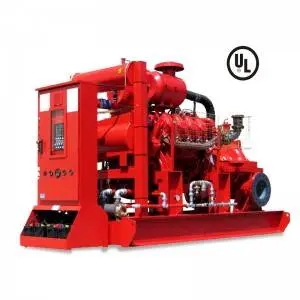
While both UL (Underwriters Laboratories) and FM (Factory Mutual) Approvals signify top-tier quality, they originate from different philosophies. Importers benefit from understanding these distinctions to select the right pump for a specific market or application. UL focuses broadly on public safety, while FM hones in on property loss prevention from an insurer’s perspective.
UL Listing: The Focus on Safety (UL 448)
UL Listing is a certification centered on public safety and technical performance. The primary standard for fire pumps is UL 448, Standard for Centrifugal Stationary Pumps for Fire-Protection Service. A UL Listed fire pump has undergone rigorous testing to confirm it meets established safety and operational standards. The UL mark assures regulators, installers, and end-users that the pump will function reliably and safely as a component within a larger fire protection system.
FM Approval: The Focus on Loss Prevention (FM 1319)
FM Approval comes from FM Global, a major commercial property insurance company. Its certification process, guided by FM 1319, Approval Standard for Centrifugal Fire Pumps, has a distinct goal: property loss prevention. FM Approvals ensure that products not only perform safely but also actively mitigate risk and can withstand severe, real-world conditions like fire and environmental stress. This focus is crucial for industries with high-value assets where minimizing property damage is paramount.
Key Differences for Importers
For an importer, the choice between UL and FM often depends on project specifications and insurance requirements. While the certifications are different, both are highly respected globally.
The core philosophical differences are clear:
| Aspect | UL Listing (UL 448) | FM Approval (FM 1319) |
|---|---|---|
| Primary Goal | Product safety and performance | Property loss prevention and risk reduction |
| Testing Focus | Conformance to established safety standards | Real-world durability and performance under stress |
| Organizational Scope | Broad, independent safety science company | Specialized property insurance and risk management |
A fire pump can be UL Listed without being FM Approved, or vice versa. In many cases, having either certification is sufficient. The critical factor for importers often becomes the end-user’s insurance carrier.
Pro Tip: Insurance carriers may have specific mandates. A facility with high-risk materials, for example, might face higher premiums or even non-renewal of its policy if its fire pump is not FM Approved. Importers should advise their clients to consult their insurance provider to confirm which certification is required or preferred.
How to Verify a Certified Fire Pump from China
Sourcing a certified fire pump china requires more than just accepting a manufacturer’s word. Due diligence is essential to protect your investment and ensure compliance. A systematic, three-step verification process provides importers with undeniable proof of a pump’s certification status. This process moves from the manufacturer’s claim to independent verification and finally to physical inspection.
Step 1: Request Certificates from the Manufacturer
An importer begins the verification process by requesting the official UL Listing and/or FM Approval certificates directly from the manufacturer. This document is the manufacturer’s formal claim of compliance. A legitimate certificate is not a simple letter; it is a detailed document issued by the certification body. Importers should scrutinize it for specific information.
A comprehensive UL certificate, for example, confirms that the pump meets standards for:
·Compliance with established safety and performance benchmarks.
·Construction integrity and material quality.
·Performance under specified operational demands.
·Adherence to related standards like NFPA 20.
Furthermore, the certification extends to the entire pump assembly, not just the pump itself. A genuinely certified system includes multiple listed components. Importers should look for documentation covering:
·UL-Listed Fire Pump
·UL-Listed Electric Motor or Diesel Engine
·UL-Listed Fire Pump Control Panel
·UL-Listed Pressure Relief and Air Release Valves
·Fuel Tank manufactured to the UL 142 standard (for diesel units)
This initial document review establishes a baseline for verification. It provides the model numbers, file numbers, and performance data needed for the next, most critical step.
Step 2: Verify with Official Online Databases
A paper certificate is only a claim. The absolute proof of certification lies within the official online databases maintained by UL and FM Global. These databases are the single source of truth, and any product not found in them is not certified.
For UL Listing:Importers must use the UL Product iQ database. The official web addresses for this free resource are https://productiq.ul.com or http://www.ul.com/database. This next-generation directory allows anyone to search for certified products. An importer can enter the manufacturer’s name, the UL file number (found on the certificate), or the specific product category to confirm the listing. The database will show the exact models that are certified, along with key details of the listing.
For FM Approval:Verification for FM Approved products is done through the FM Approval Guide. The official web address for this tool is https://www.approvalguide.com/. Similar to the UL database, this online guide lists all products that have successfully earned FM Approval. Importers can search by manufacturer or product type to validate that the specific fire pump model is certified for loss prevention.
Crucial Reminder: If a fire pump model from a Chinese manufacturer does not appear in these official databases, it is not certified. No document or promise from the manufacturer can override the information in these independent, publicly accessible records.
Step 3: Inspect the Pump’s Data Plate Markings
The final step in the verification process occurs when the pump arrives. Every certified fire pump must have a permanent data plate (also called a nameplate) affixed to it. This plate is the physical link between the product in hand and the certification documents.
The data plate serves as the pump’s official identity, providing unambiguous proof that the physical unit matches the certified design. Importers or their agents must inspect this plate for several key pieces of information:
1.The Official Certification Mark: The plate must clearly display the registered UL or FM certification mark.
2.Manufacturer’s Name: The name must match the company listed on the certificate and in the online database.
3.Model Number: This must correspond exactly to the certified model.
4.Serial Number: A unique identifier for tracking the specific unit.
5.Performance Data: Key specifications like rated flow, pressure, and power must be present.
Note: Upon receiving a shipment, the first quality check should be to compare the data plate on each fire pump china with the certificate and the online listing. Any discrepancy is a major red flag and indicates a potential compliance issue. This final check ensures you received the exact certified product you paid for.
Sourcing Compliant Pumps: What to Look For
Beyond verifying certifications, importers must understand the broader context of compliance and manufacturing quality. Sourcing a compliant fire pump involves evaluating its role within a complete system, vetting the manufacturer’s credentials, and selecting the right pump type for the intended application.
The Role of NFPA 20 Compliance
UL/FM certifications and NFPA 20 compliance work together to ensure a fire pump system’s integrity. While UL and FM test and certify individual components, NFPA 20, Standard for the Installation of Stationary Pumps for Fire Protection, governs the entire system’s design, installation, and performance.
NFPA 20 mandates that only listed pumps are used and sets critical performance benchmarks. For example, a pump must deliver at least 65% of its rated pressure when operating at 150% of its rated flow. This standard ensures that every part of the system—from the pump and driver to the controller and piping—functions as an integrated, reliable unit. A UL/FM certified fire pump china is designed to meet these NFPA 20 requirements, making the two inseparable for true compliance.
Partnering with Reputable Manufacturers
An importer’s success depends heavily on the reliability of their manufacturing partners. When vetting a Chinese manufacturer, importers should look for specific indicators of quality and dependability.
A reputable manufacturer demonstrates a history of excellence. Key criteria include over a decade of operational experience, a high reorder rate from existing clients, and robust quality assurance protocols like on-site material checks and finished product inspections.
Furthermore, a trustworthy partner will readily provide third-party test reports and hold relevant certifications like ISO 9001. This due diligence ensures the manufacturer is committed to producing equipment that consistently meets international standards.
Understanding Split Case vs. Other Pump Types
Fire pumps come in several designs, each suited for different applications. The horizontal split case pump is a popular choice for its reliability and ease of maintenance.
Precision balancing and a simple design contribute to its mechanical dependability and efficient operation. Key advantages include:
·Easy Maintenance: The casing splits horizontally, allowing technicians to inspect and service internal components like the impeller and bearings without disturbing the motor or piping.
·Durability: These pumps are robustly built for a long service life and stable operation, making them ideal for demanding fire service applications in hospitals, airports, and manufacturing facilities.
·High Efficiency: A dual-suction impeller design reduces the required suction head and improves overall efficiency.
Other common types include end suction pumps, which are more compact and cost-effective for smaller systems, and vertical turbine pumps, which are essential when the water source is below the pump, such as in an underground tank.
Importing a UL/FM certified fire pump china is a critical business decision. This choice safeguards investments, ensures regulatory compliance, and upholds the highest safety standards.
Importers must always perform due diligence. They should verify every certification through the official UL and FM online databases.
Choosing a genuinely compliant pump provides the ultimate assurance. It will perform reliably when it matters most, protecting both valuable assets and human lives. This verification process is the cornerstone of a secure and reputable supply chain.
FAQ
What is the primary difference between UL and FM?
UL Listing focuses on public safety and product performance against established standards. FM Approval, driven by an insurer’s perspective, centers on property loss prevention and tests for real-world durability under severe conditions. Both signify top-tier quality.
Is a pump certified if it’s not in the official online database?
No. The UL Product iQ and FM Approval Guide databases are the only definitive sources of truth. A product absent from these official listings is not certified, regardless of any documentation provided by the manufacturer.
Does UL/FM certification equal NFPA 20 compliance?
Not directly. UL/FM certifies the pump component itself. NFPA 20 is a system standard governing the entire fire pump installation. However, NFPA 20 requires the use of listed pumps, making UL/FM certification a prerequisite for compliance.
What is the most critical verification step?
The most critical step is cross-referencing the pump’s model number with the official UL Product iQ or FM Approval Guide online databases. This action provides undeniable proof of a product’s certification status.
Post time: Dec-02-2025